Join the Conversation
Check out the latest and spread the word.

Stay updated via social media
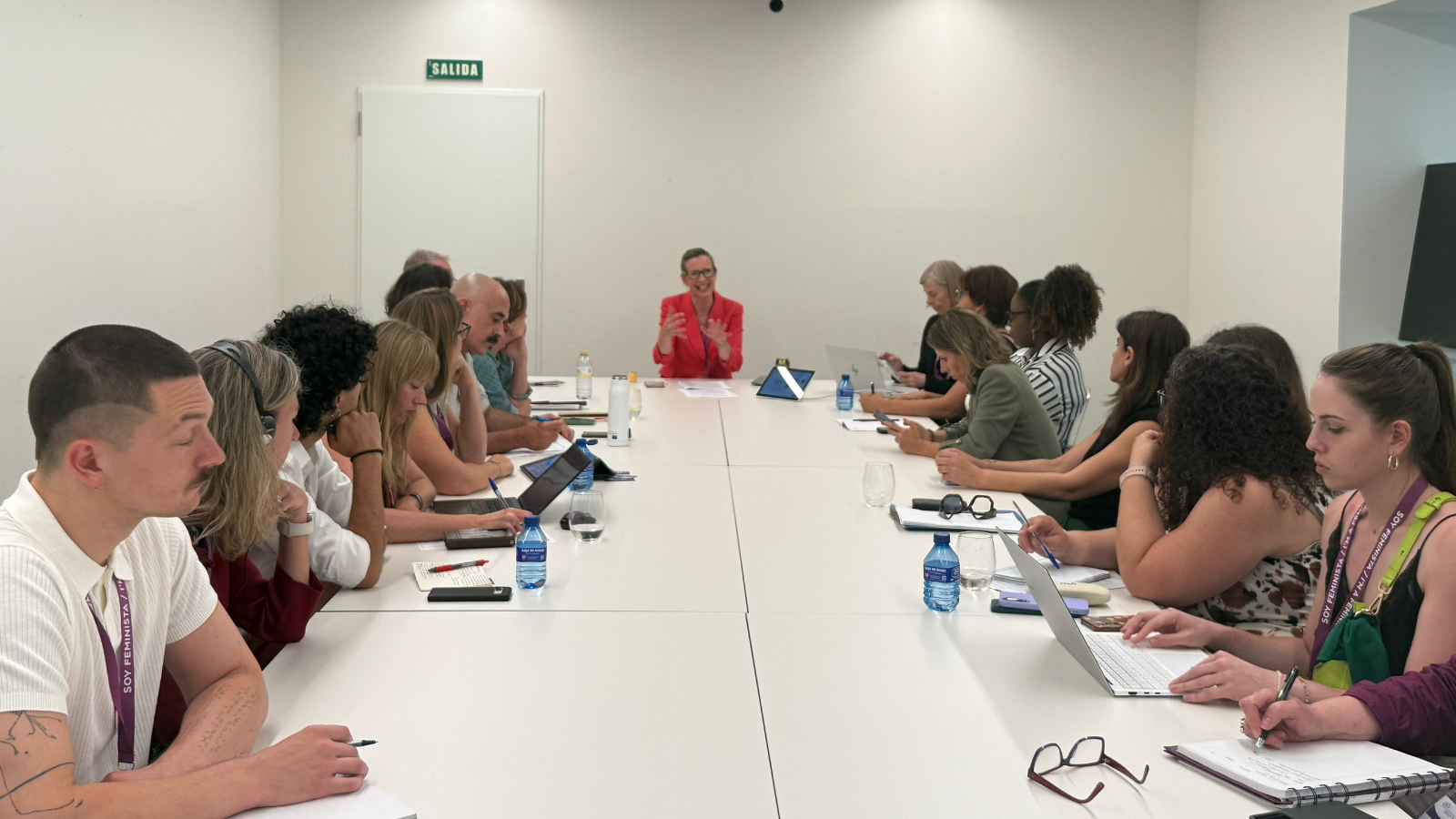
Attendees at the side event “Masculinities in Dispute: Men and Boys as Key Actors in Feminist Foreign Policy” explore how engaging men and boys as partners for change can strengthen feminist foreign policy approaches
Spain, 2–3 June 2026 — more than 700 government leaders, international organizations, civil society representatives, and feminist advocates gathered in Madrid for the Fifth Ministerial Conference on Feminist Foreign Policy: Building Peace and Democracy. Hosted by Spain, the conference examined how advancing gender equality is fundamental to strengthening peace, democracy, and social cohesion worldwide.
As part of the conference, UN Women moderated the high-level side event “Masculinities in Dispute: Men and Boys as Key Actors in Feminist Foreign Policy.” The strategic dialogue brought together representatives from governments, research institutions, and civil society to explore how masculinities shape current challenges to gender equality, democratic resilience, and peacebuilding.
The discussion highlighted growing concerns around misogynistic and anti-democratic narratives, particularly in digital spaces, and examined the role of men and boys as partners in advancing more inclusive and equitable societies. Participants reflected on the gaps in prevention, socialization, and leadership, and identified actions needed to strengthen accountability and engagement within gender equality and Feminist Foreign Policy agendas.
Throughout the discussion, speakers underscored why engaging men and boys is essential to advancing gender equality, peace, and democracy. As Cristina Hernández noted,
"If we want change for women, then there have to be changes among men."
Participants highlighted the importance of addressing the real challenges facing many boys and young men, including mental health, wellbeing, and changing social expectations, while also responding to the rise of online misogynistic narratives that threaten social cohesion and democratic values. The dialogue emphasized that incorporating masculinities into gender and foreign policy analysis strengthens efforts to prevent conflict, build inclusive institutions, and advance more effective and sustainable gender equality outcomes.
For UN Women, addressing masculinities is central to transforming discriminatory social norms and power structures. This approach is reflected in initiatives such as HeForShe and the Barbershop methodology, which work with leaders and institutions to promote accountability and drive systemic change. Through the HeForShe Alliance, UN Women has demonstrated that engaging leaders can deliver measurable results. The President of the Government of Spain, H.E. Pedro Sánchez, is among the Alliance’s HeForShe Champions, joining a global network committed to advancing gender equality through institutional action.
Moderated by Sarah Hendricks, Director of UN Women’s Policy, Programme & Intergovernmental Division, the panel featured Cristina Hernández, Director of Spain’s Women’s Institute; Audur Edda Jökulsdottir, Special Envoy for Gender Equality at Iceland’s Ministry for Foreign Affairs; Ritxar Bacete of Equimundo; Joni van de Sand of MenEngage Alliance; and Miguel Lázaro of EQUALS – Institute for Masculinities and Equality.
The dialogue drew on Spain’s Bróders initiative, which focuses on youth masculinities and prevention in digital and peer environments, alongside Iceland’s experience implementing the HeForShe Barbershop Toolkit 2.0 to strengthen leadership accountability and institutional transformation.
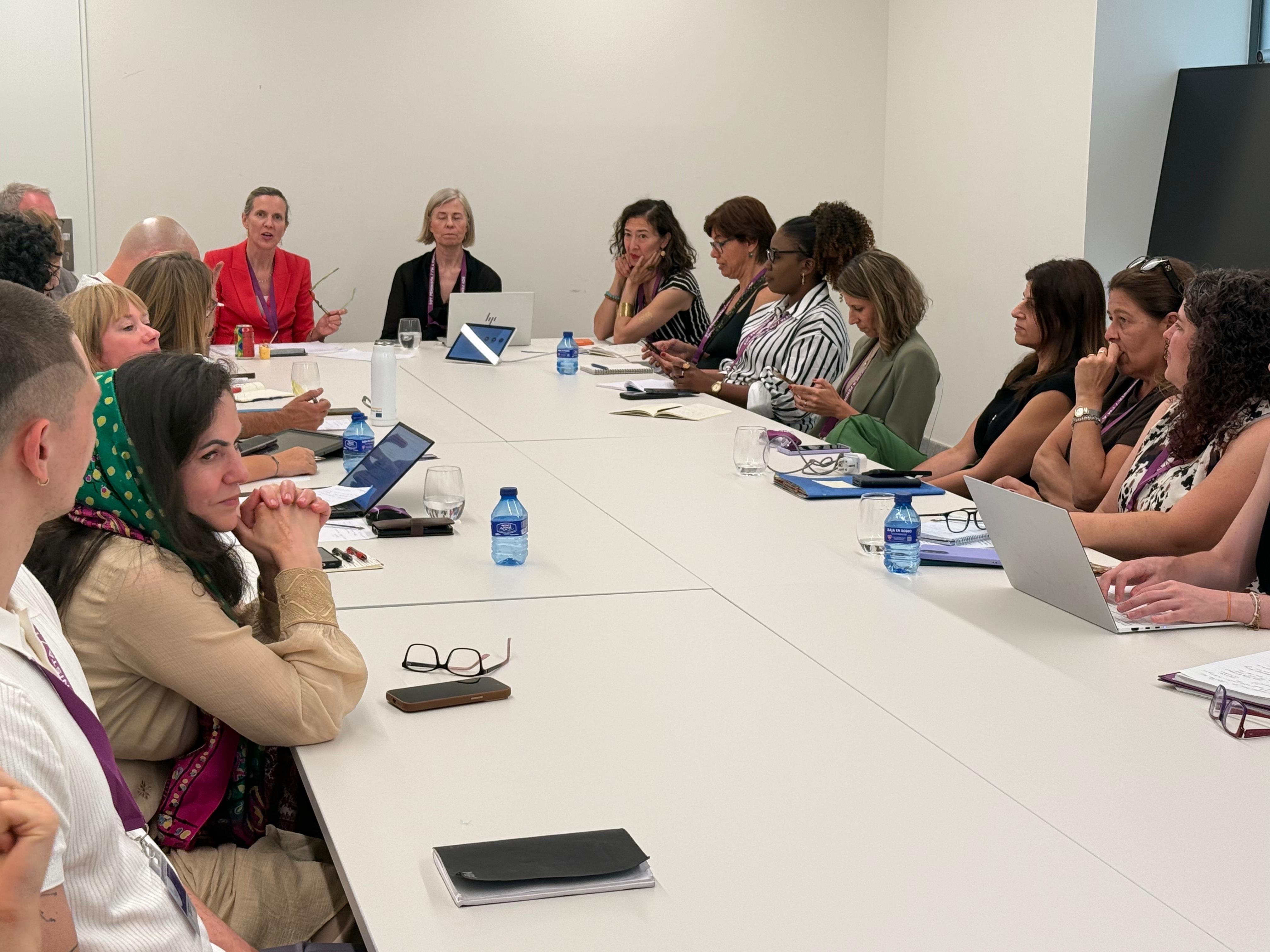
Participants highlighted the need for concrete tools that can translate commitments into action and support culture change across institutions. To address this, following the session, UN Women and the Ministry for Foreign Affairs of Iceland hosted a dedicated briefing on the HeForShe Barbershop Toolkit 2.0. The Toolkit was presented as a practical instrument for governments advancing Feminist Foreign Policy, offering structured approaches to strengthen male allyship, facilitate dialogue, and support gender-transformative engagement with men and boys across institutions.
UN Women emphasized that the Toolkit is part of a broader ambition to build a global architecture for equitable masculinities and male allyship in support of gender equality. Beyond providing tools and guidance, UN Women seeks to serve as a global platform for coordination, implementation support, and knowledge generation in this area. This includes partnering with Member States to adapt and scale the Toolkit across diplomatic, governmental, educational, and multilateral settings, particularly within Feminist Foreign Policy frameworks.
Check out the latest and spread the word.