Join the Conversation
Check out the latest and spread the word.

Stay updated via social media
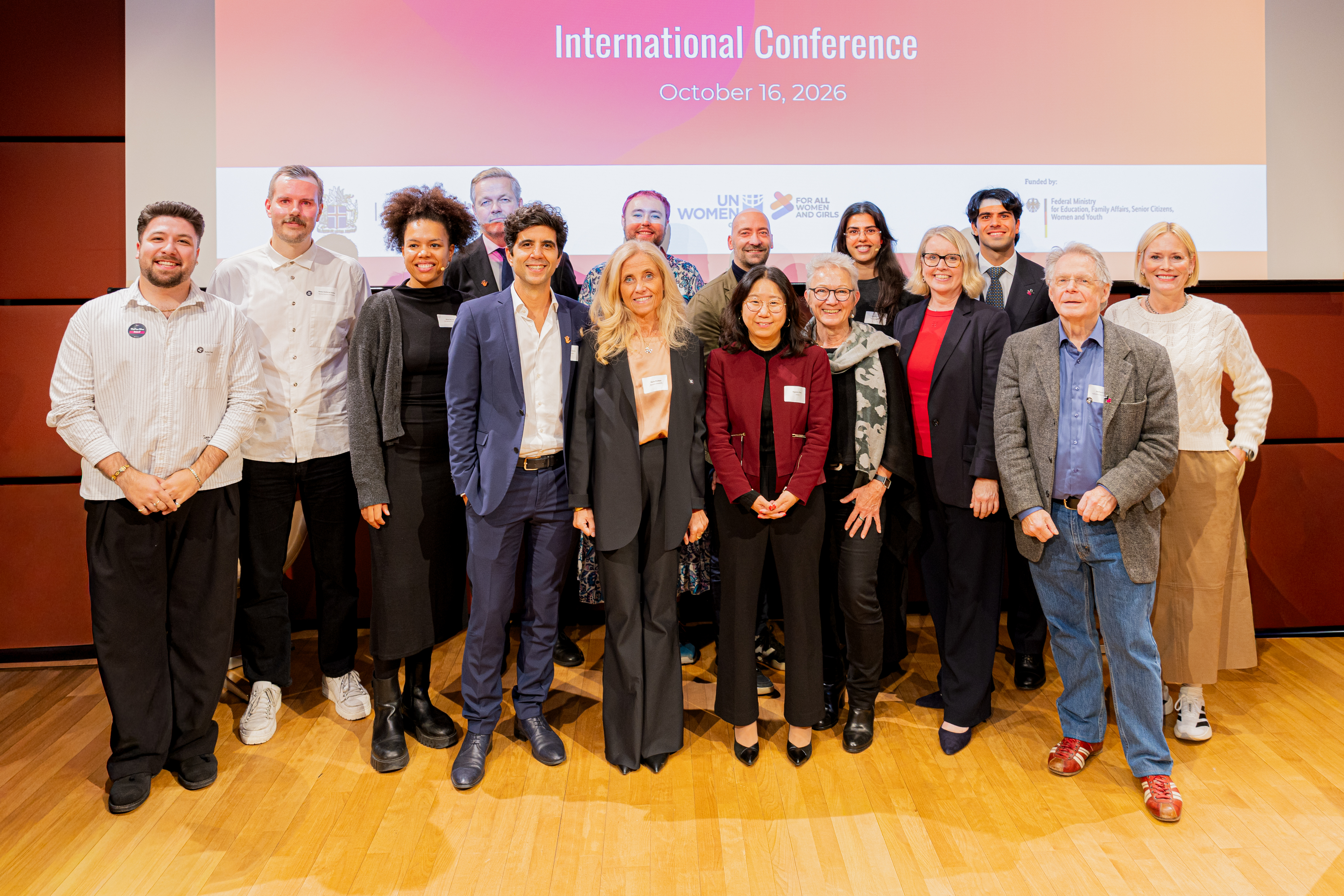
Group photo of the speakers at the international conference. (Photo: Mari Vass/UN Women Deutschland)
Berlin, Rome, 16 October 2026 - The international conference HeForShe: Navigating Masculinities, Advancing Gender Equality, hosted by UN Women Germany in collaboration with the Embassy of Iceland, brought together policymakers, diplomats, researchers, practitioners, activists and community leaders to explore how men and boys can contribute to advancing gender equality. The conference examined how ideas about masculinity are shaped by social norms, media, institutions and culture, and how these influences affect individuals, relationships and society. It provided a space to exchange research, share practical experiences and identify approaches to engaging men and boys in challenging harmful gender norms and advancing more equitable societies.
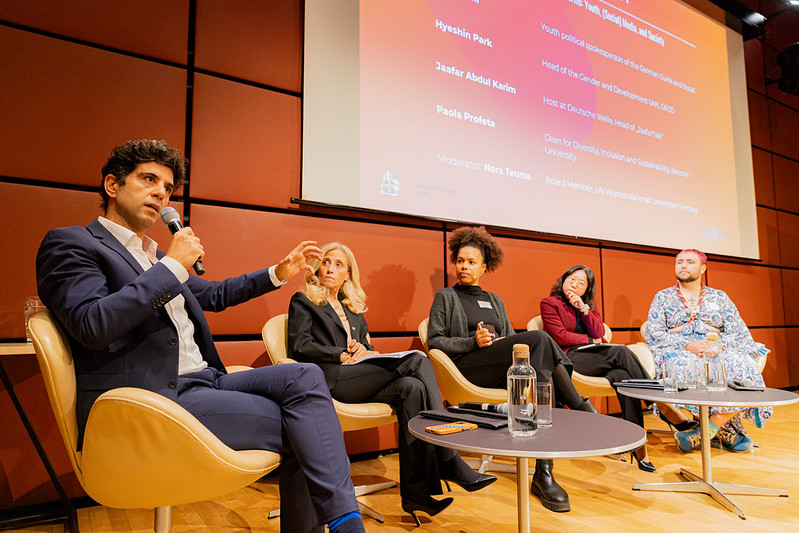
The conference featured two panel discussions exploring how young people navigate changing masculine norms in an increasingly polarized media environment, and how leadership, accountability and institutional change can embed gender equality into everyday practices. The discussions took place against a backdrop of growing polarisation around gender equality, including the spread of misogynistic narratives online and offline. Speakers highlighted how men can experience pressure around identity, purpose, work, relationships and social expectations, and how uncertainty can leave some seeking guidance in spaces that reinforce harmful ideas about masculinity.
At the same time, the conference emphasised that masculinities are not fixed. They can evolve through changes in social expectations, institutions and everyday behaviours, creating opportunities for men and boys to embrace more equitable ways of relating to others.
The Embassy of Iceland highlighted the country’s experience in advancing gender equality, including progress on women’s political representation, parental leave for men and the sharing of care responsibilities. Iceland ranked first in the World Economic Forum’s Global Gender Gap Report 2026 for the seventeenth consecutive year. Speakers also cautioned that progress cannot be taken for granted, pointing to the growing influence of anti-gender narratives and the need for continued collective action.
Dr Angela Langenkamp, President of UN Women Germany, highlighted the backlash against gender equality and the urgency of sustaining progress. Referencing UN Women’s Gender Snapshot 2026, she noted that, at the current pace, it could take another 171 years to achieve gender equality.
Francesco Merola from the HeForShe Global Office at UN Women emphasised that men have an important role to play in addressing these challenges. Through HeForShe, men are encouraged to use their influence in workplaces, families, communities and institutions to challenge harmful narratives, promote social norms change and translate their commitment to gender equality into action.
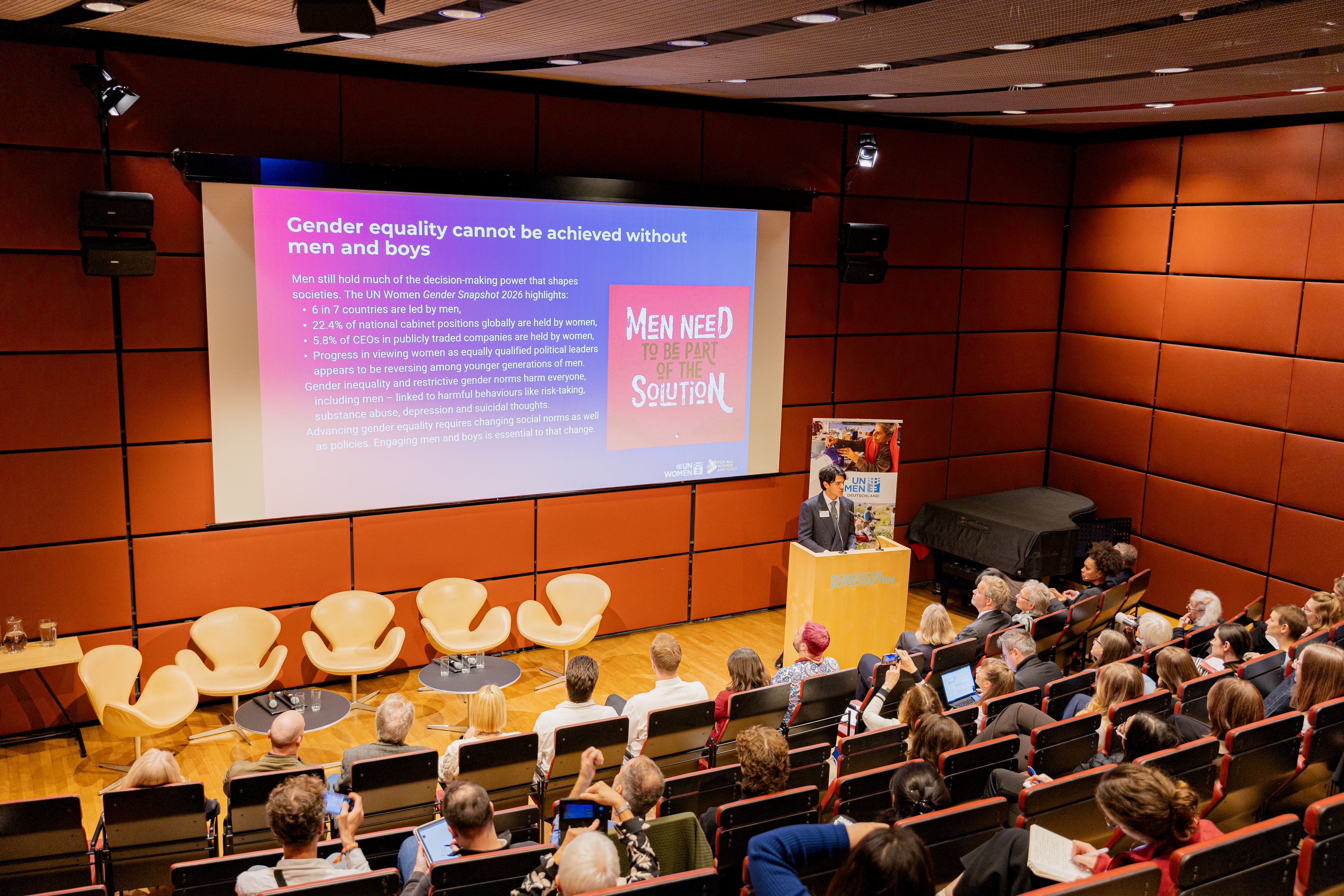
Putting allyship into practice
Practical tools and examples demonstrated how these discussions can translate into action. Martin Speer and Gerhard Hafner, HeForShe Germany Advocates, presented the HeForShe Barbershop Toolkit 2.0, an evidence-informed resource designed to support meaningful conversations about gender equality, masculinities and allyship.
Since its relaunch, the toolkit has been implemented across different contexts, including by partners such as NYU Stern, Teck Resources and UK Policing. Its adaptability allows organisations to use facilitated conversations to address gender equality in ways that reflect their own workplaces, institutions and communities.
The conference also featured practitioner videos showcasing different approaches to engaging men and boys, providing opportunities to share experiences and demonstrate how local initiatives can contribute to broader social change.
These examples reinforced the importance of moving beyond awareness-raising alone. Men’s engagement can be strengthened by providing practical tools, creating opportunities for reflection and establishing clear expectations for action and accountability.
Turning commitment into action
In her closing remarks, Nasime Salehi, a board member of UN Women Germany, called on participants to leave the conference with more than new perspectives and ideas. She encouraged them to challenge stereotypes, create spaces where men and boys can speak openly about identity and belonging, and use their influence in workplaces, institutions, communities and homes to advance gender equality.
The conference reinforced a central message of HeForShe: progress requires men and boys to take an active role in challenging the norms and structures that sustain inequality. Through open conversations, practical tools and institutional commitment, they can help build more equitable relationships and communities.
Explore the full recap of the conference’s panel discussions on the UN Women Germany website
Check out the latest and spread the word.