Join the Conversation
Check out the latest and spread the word.

Stay updated via social media
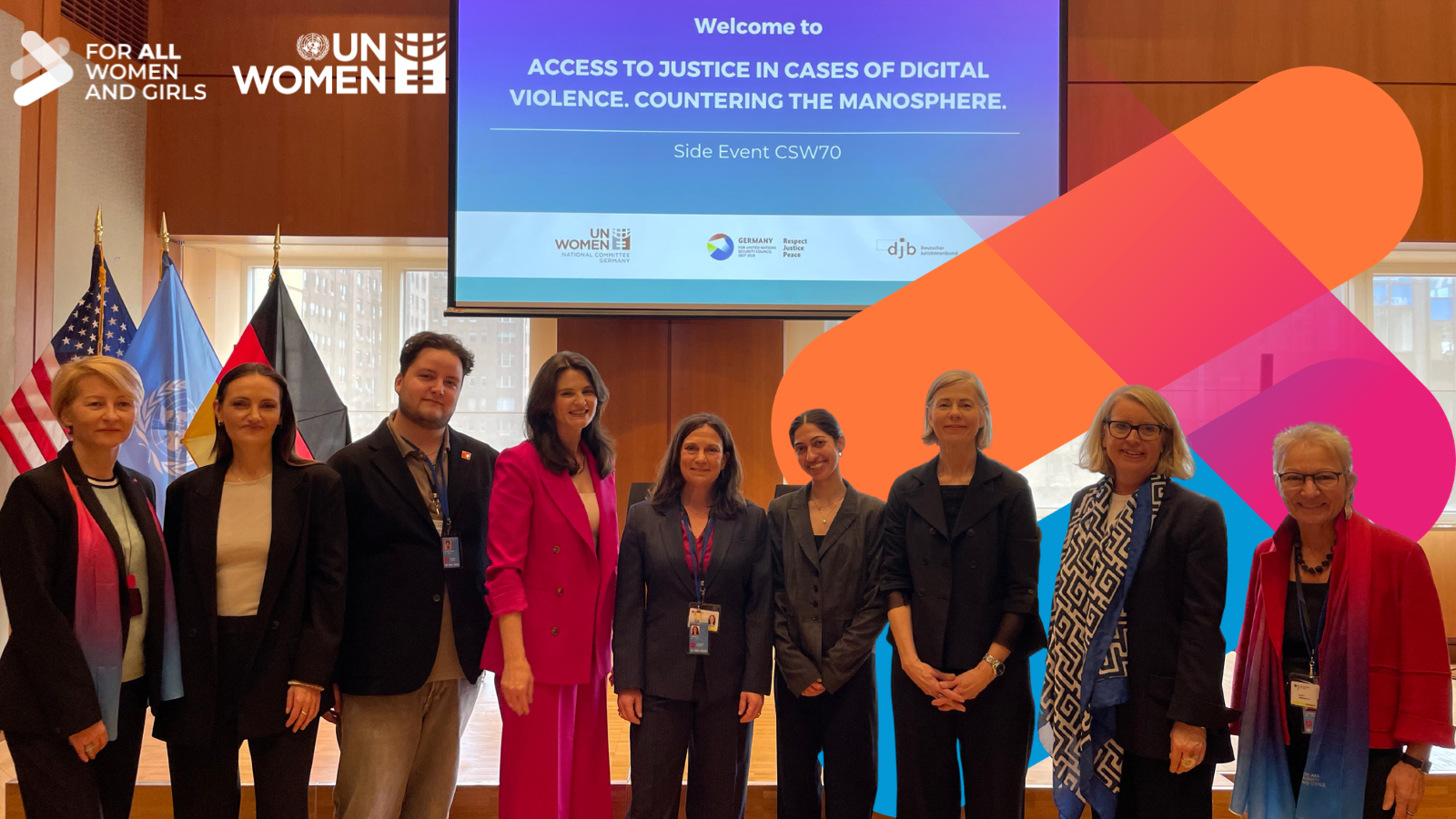
From Left to Right: Vesna Jaric, Global Lead, HeForShe Initiative; Dr. Carolin Weyand, Board Member, UN Women National Committee Germany; Samet Beşyaprak, DGVN Youth Delegate to CSW70, Nina Jankowicz,CEO, American Sunlight Project ; Verena Haisch, Vice-President, German Women Lawyers Association; Megan Ortwein, Student, NYU's Stern School of Business; Auður Edda Jökulsdóttir, Special Envoy for Gender Equality at the Ministry for Foreign Affairs – Iceland; Katharina Jestaedt, Head of the Department for Women and Equality, Federal Ministry for Education, Family Affairs, Senior Citizens, Women and Youth-- Germany; Dr Angela Langenkamp, president of UN Women National Committee Germany. Photo Credit: UN Women Germany National Committee
11 March 2026 - During the Commission on the Status of Women 70 (CSW70), a timely side event convened on 11 March 2026 at the Permanent Mission of Germany and organized by Federal Ministry for Education, Family Affairs, Senior Citizens, Women and Youth - Germany, UN Women National Committee Germany, and German Women Lawyers Association. The eventbrought together stakeholders to examine access to justice in cases of digital violence and strategies to counter the growing influence of the manosphere. The discussion reflected a central priority of CSW70: addressing emerging and persistent forms of gender-based violence in an increasingly digital world.
With more than 5.5 billion people online, digital platforms have become central to communication, learning and social interaction. Yet these same spaces are also being used to spread misogyny, harassment and abuse at scale. A key concern highlighted during the event was the rise of the manosphere; a loosely connected network of online communities that often present themselves as spaces for men’s self-improvement, but which frequently promote harmful narratives, regressive gender norms and adversarial views of gender equality.
Participants emphasized that the growth of these online ecosystems is not accidental. Platform algorithms designed to maximize engagement tend to amplify provocative and emotionally charged content, allowing increasingly extreme narratives to spread rapidly. Entry points such as fitness, dating advice and self-development content can act as gateways into more ideological spaces. These dynamics are compounded by broader social and economic uncertainties facing many young men, including shifting labour markets and evolving gender roles, which can create a sense of identity anxiety and perceived loss of status.
The discussion also highlighted the powerful emotional appeal of these communities. Many young men report a lack of belonging and limited access to supportive offline spaces. In this context, manosphere content often fills a gap, offering simplified explanations for complex personal challenges and framing them through narratives that assign blame and reinforce rigid, performance-based models of masculinity. Over time, repeated exposure can normalize harmful attitudes and, in some cases, contribute to pathways toward radicalization.
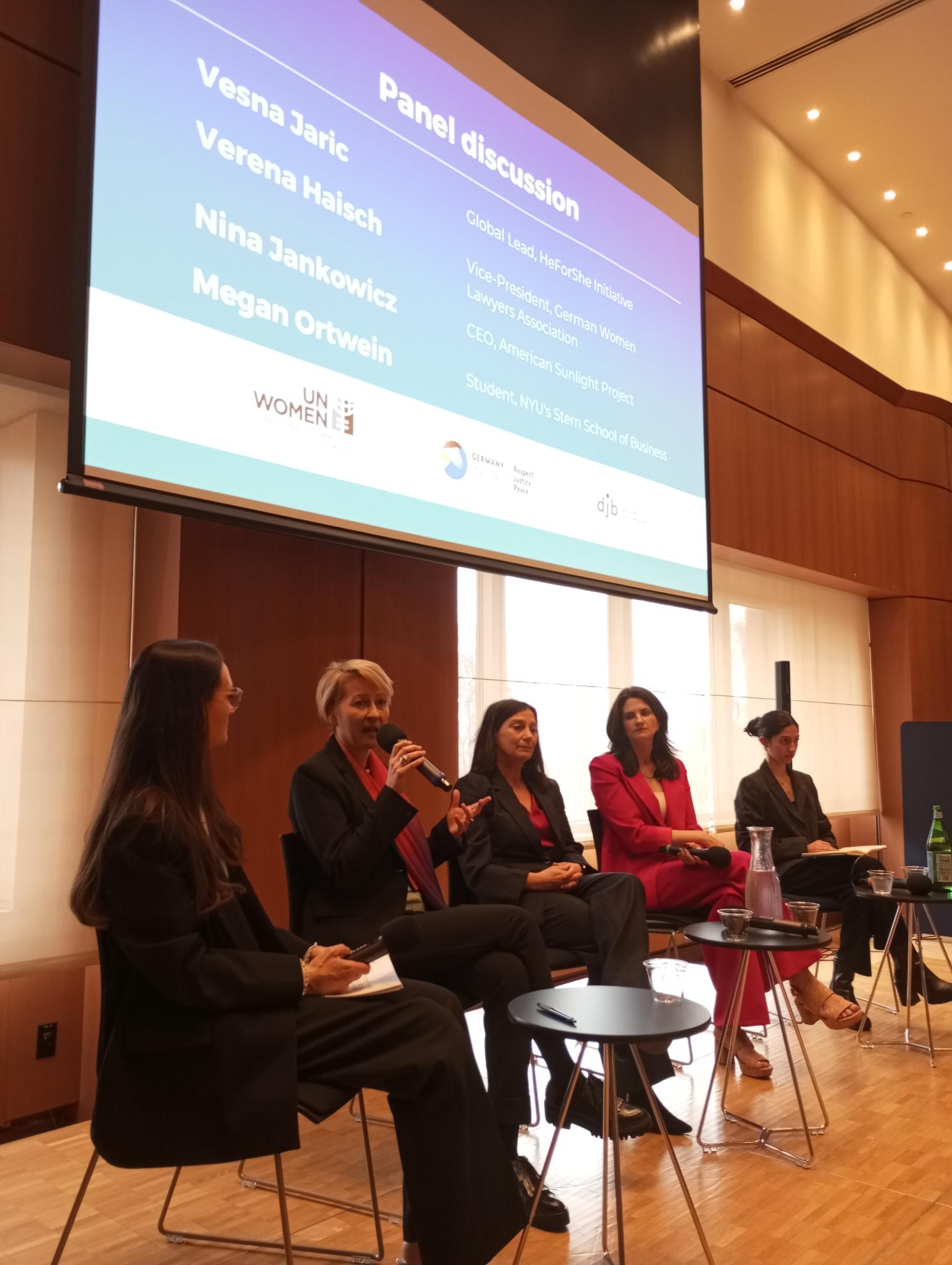
A key takeaway from the session was that ending digital violence against women and girls requires a whole-of-society approach. Legal reform must be complemented by stronger platform accountability, including improved content moderation, safer algorithm design and reduced monetization of harmful content. At the same time, prevention efforts must address the root causes of harmful online behavior by investing in digital literacy, critical thinking and emotional skills among boys and young men.
Importantly, participants stressed that countering harmful narratives is not only about responding to negative content, but also about proactively building inclusive digital spaces. Positive, peer-driven narratives can help normalize equitable masculinities and provide credible alternatives to the models promoted within the manosphere. This includes elevating voices that demonstrate respect, emotional awareness and shared responsibility in relationships and society.
Looking ahead, there was broad agreement on the need to prioritize stronger regulation of online ecosystems alongside early preventive interventions. Addressing algorithmic amplification, strengthening safeguards against emerging forms of technology-facilitated abuse, and scaling credible, positive voices were identified as critical entry points. Timing is essential: interventions must reach young users early, before exposure to increasingly extreme content shapes attitudes and behaviors.
As discussions at this side event made clear, ensuring access to justice in cases of digital violence is inseparable from the broader task of transforming the digital environment itself. Through coordinated action across governments, platforms, civil society and initiatives like HeForShe, there is a growing opportunity to foster safer, more equitable online spaces that benefit everyone.


Check out the latest and spread the word.